T-54c: portable tools
Cu and SST versions are selected for the material and required joint. We consider geometry, access and tube supports.

T-DRILL · Portable tools
Build the workstation around your workpiece. The tool, attachment, table and branch tube preparation equipment perform different tasks and need to be selected together.
Portable T-DRILL solutions adapt collaring to the location and organisation of work. The Cu or SST variant, required range and long tube handling determine the set. Attachments and tables work with the forming tool; they do not replace it.
Cu and SST versions are selected for the material and required joint. We consider geometry, access and tube supports.
Attachments extend the range of a suitably selected set. We check version, tooling and application compatibility.
HFT-2000 and HFT-2000 SS support tube handling and positioning. Working length can be extended with additional modules according to the configuration.
Equipment for preparing the branch tube end for the relevant process. Selection depends on the joining method and workpiece dimensions.
T-DRILL catalogue
Configuration and availability are confirmed during selection.
9 items
Select 2–3 models from the same technology family to compare.
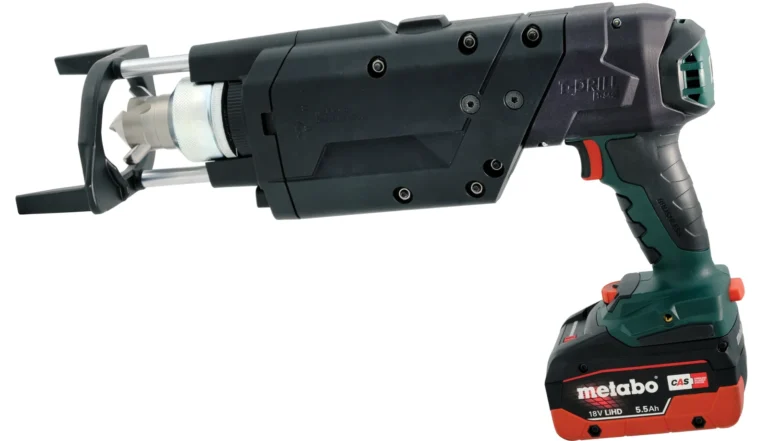
Cordless portable tool
The cordless T-54c forms a collar directly in a copper tube. The branch tube is then inserted into the prepared outlet and brazed. The set is selected for tube diameters and wall thicknesses.
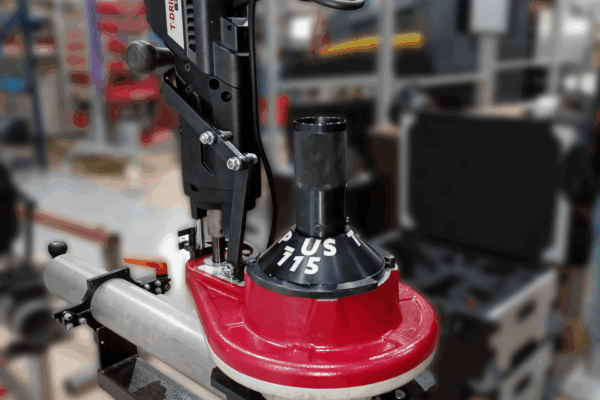
Corded portable tool
A corded system for collaring steel and stainless steel tubes. Tooling, clamping and equipment are selected for the workpiece geometry.
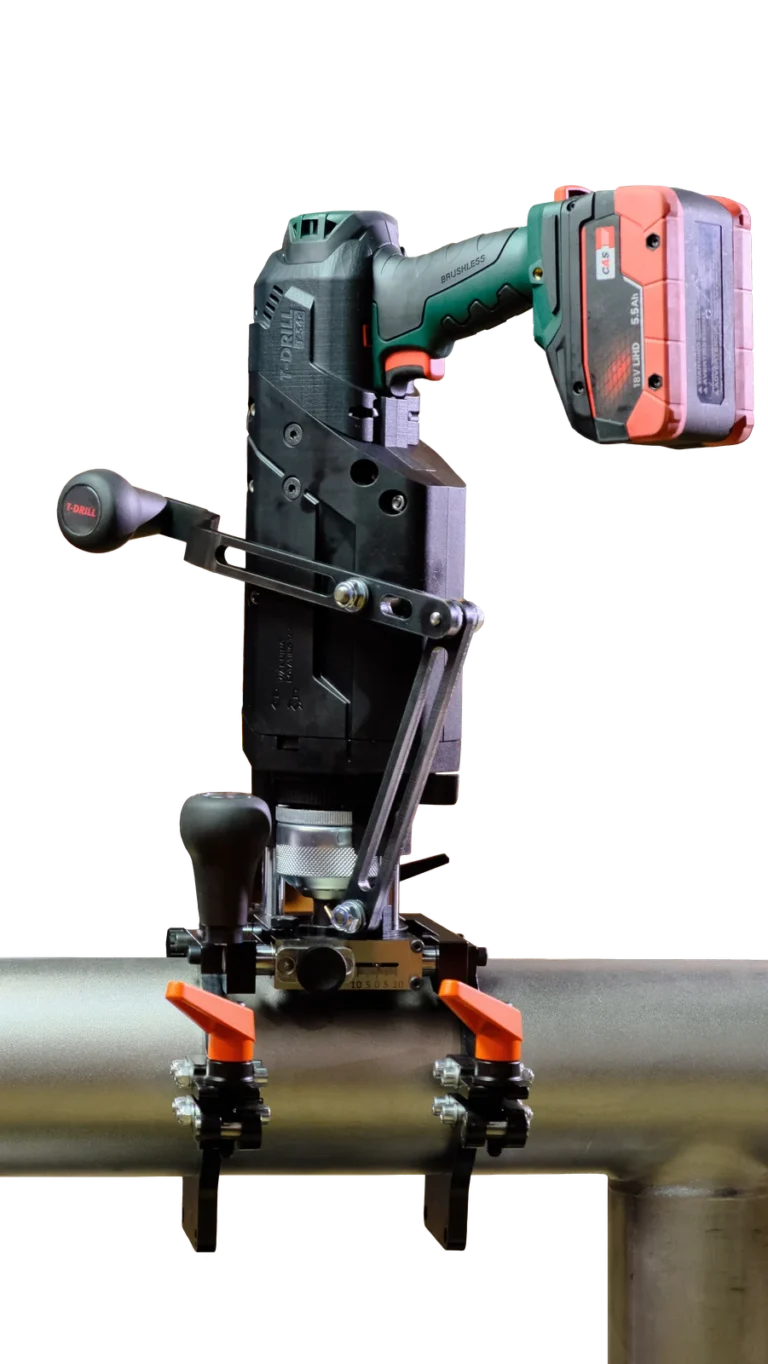
Cordless portable tool
T-54c SST combines a cordless drive with a clamping module for steel tubes. It forms a branch collar directly from the tube wall and then trims the edge for subsequent joining.
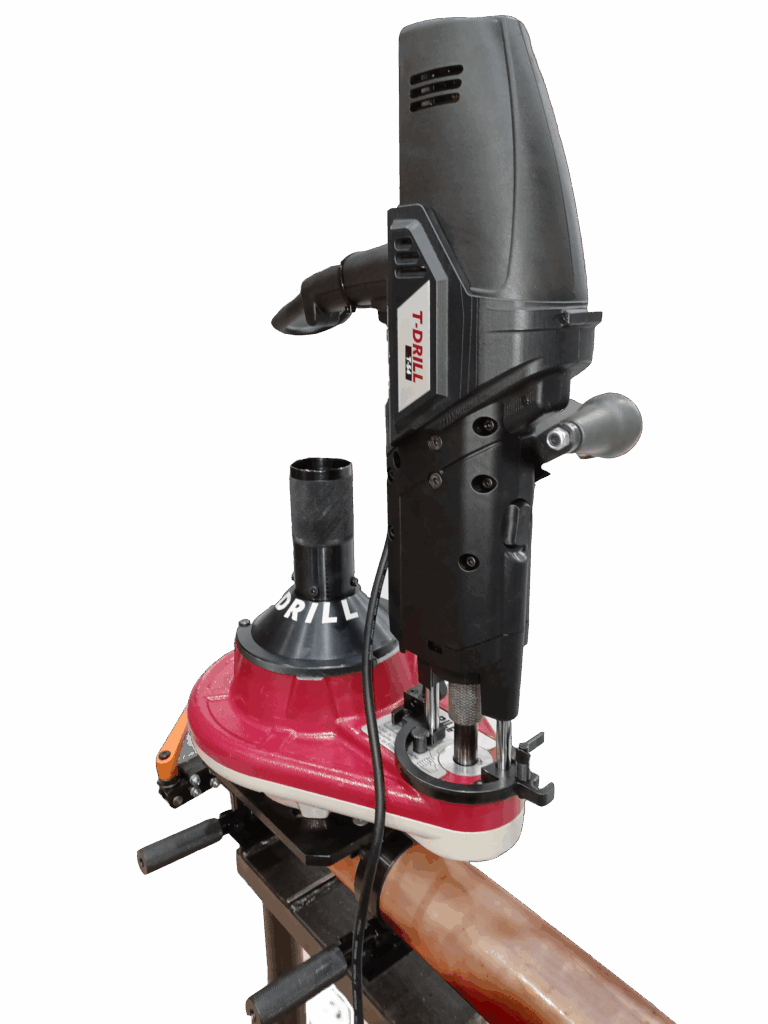
Range extension unit
PLUS 115 Cu extends the capabilities of a compatible T-54 family tool. The set forms Ø54–115 mm branches; tools and clamping are selected for the run tube.
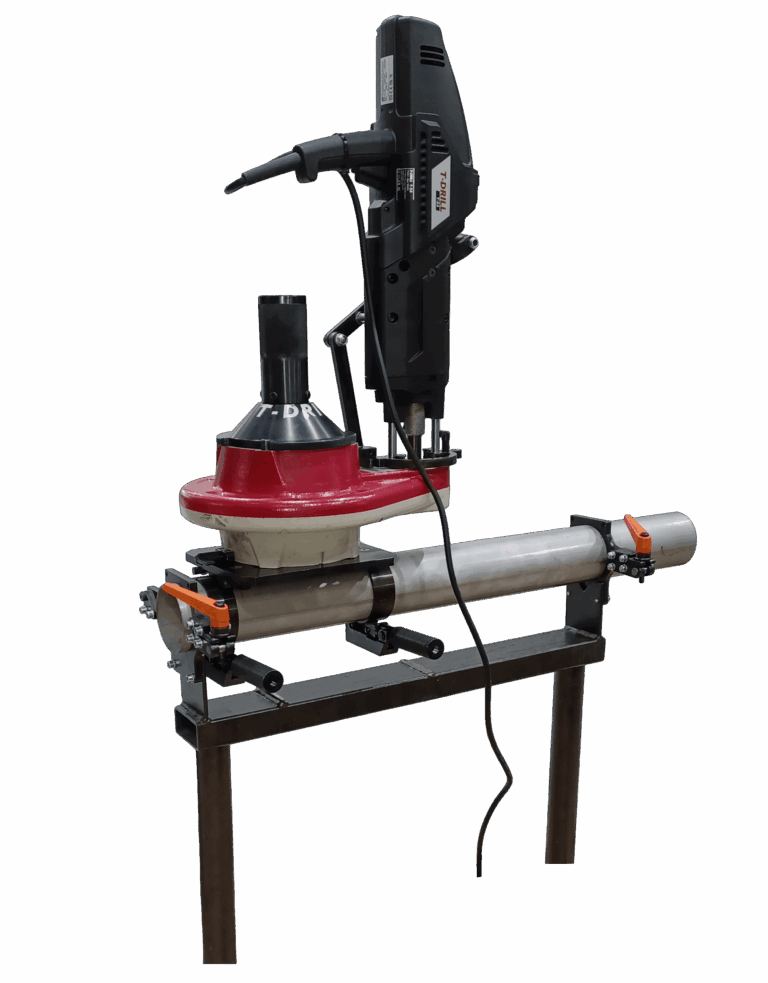
Range extension unit
PLUS 115 SST extends the capabilities of a compatible T-54 family tool. The set forms Ø48.3–114.3 mm branches; tools and clamping are selected for the run tube.
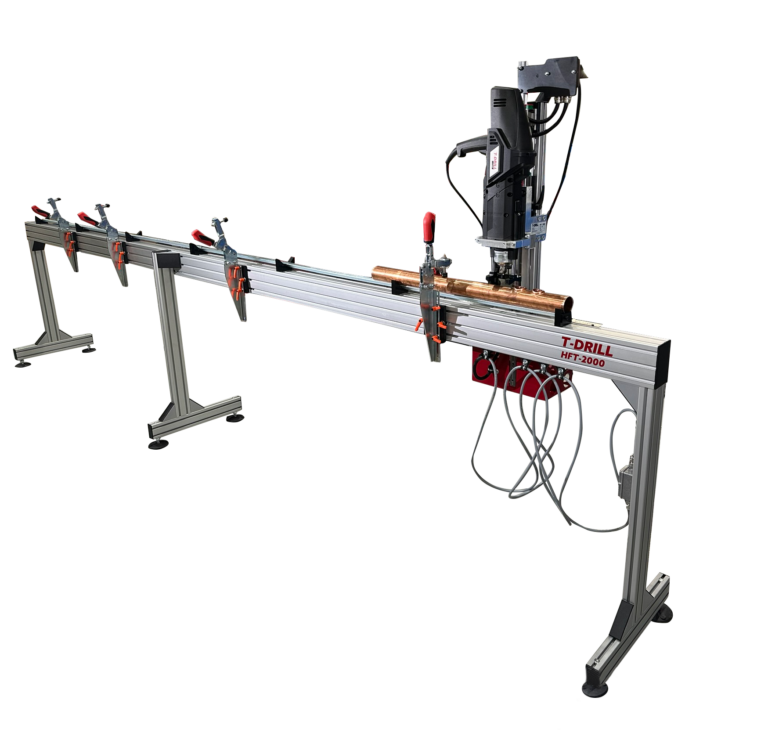
Modular work table
HFT-2000 organises tube support and positioning when forming multiple branches. The nominal 2000 mm working range can be extended with additional modules.
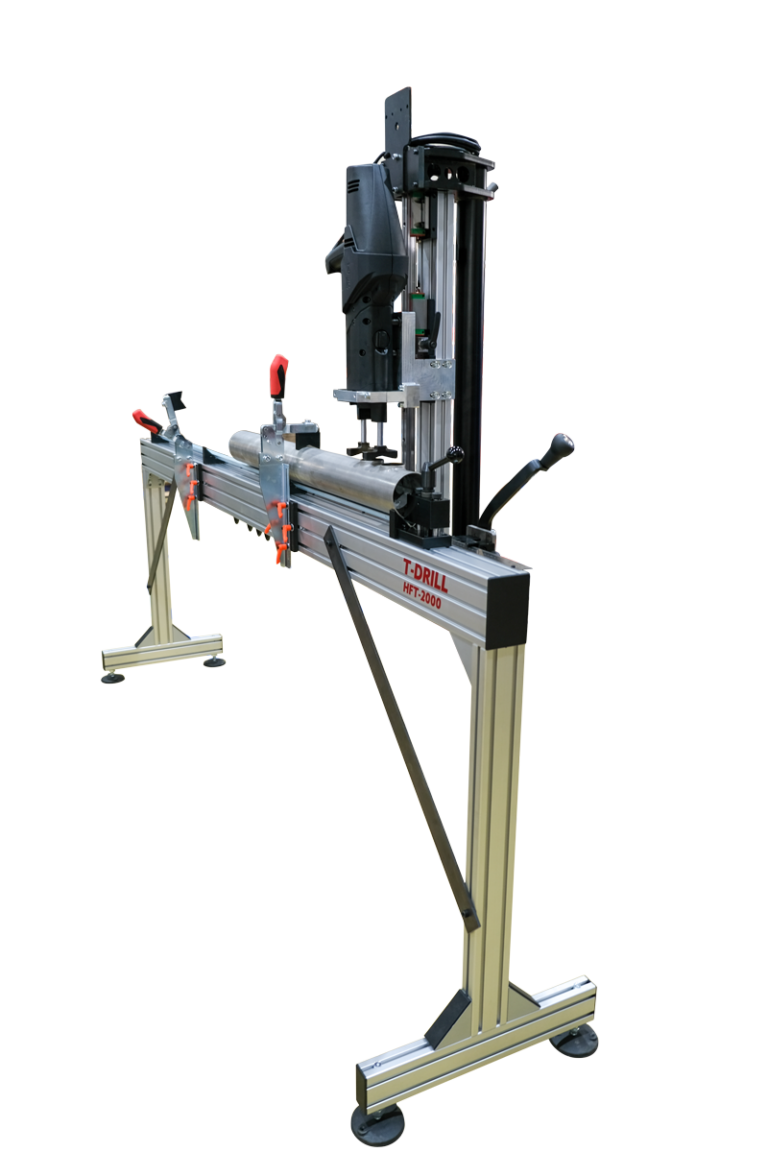
Modular work table
HFT-2000 SS organises tube support and positioning when forming multiple branches. The nominal 2000 mm working range can be extended with additional modules.
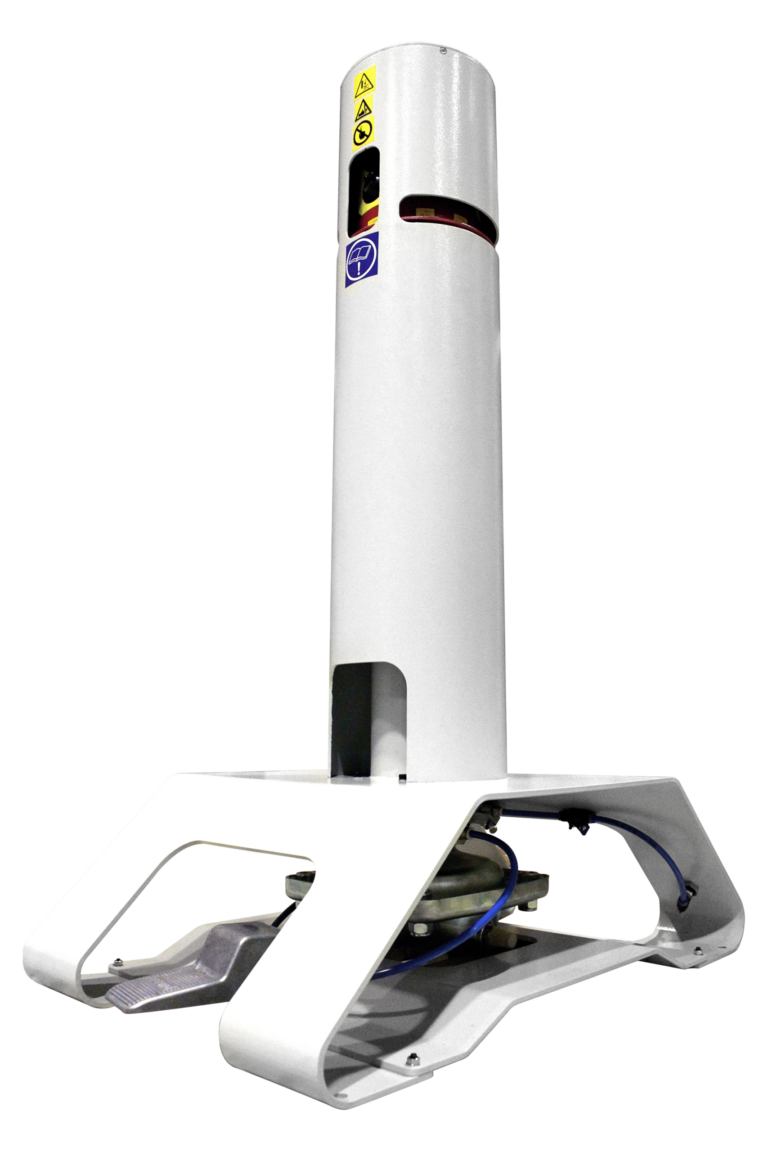
Tube end notching tool
PND-54 notches and dimples the branch tube end before insertion into the formed collar. It helps set insertion depth and maintain the joint flow area.
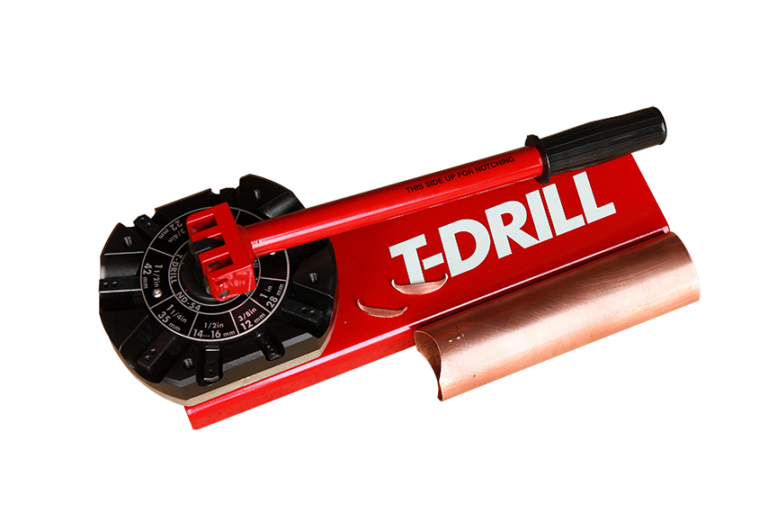
Tube end notching tool
ND-54 notches and dimples the branch tube end before insertion into the formed collar. It helps set insertion depth and maintain the joint flow area.
No results. Change the name or filter.
Selection with TARGA
It is part of a compatible set. Before selection, we check the correct base tool, material variant and required equipment.
Yes. Workstation length can be extended with modules. Working length, travel and supports are agreed on the configuration drawing.
Send the model, nameplate and intended operation. The version designation helps establish compatibility between set components.