TCC: straight lengths
Input material in the form of straight tubes. We compare loading, feeding and cut part unloading.

T-DRILL · Cutting
Select chipless cutting for your input material, part length and next operation. TCC includes manual, coil and rack-loaded feeding.
Cut length, end quality and feeding must be selected together. Decoiling and straightening are distinct from automatic loading of straight tube lengths.
Input material in the form of straight tubes. We compare loading, feeding and cut part unloading.
Coil and RL & Coil configurations. Decoiling, straightening and feeding are selected for the complete line.
TCC-45 SVO and TCC-45 EF3 / EF8 lines. EF versions combine cutting and end forming; operation scope and part transfer are specified for the project.
T-DRILL catalogue
Configuration and availability are confirmed during selection.
9 items
Select 2–3 models from the same technology family to compare.
Tube cutting machine
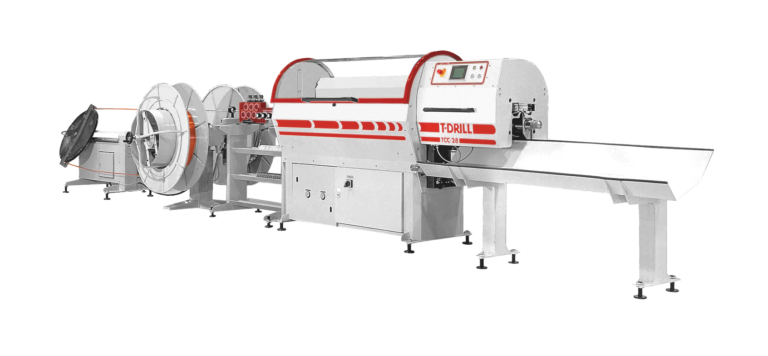
TCC-28 Coil combines decoiling, straightening and chipless tube cutting to programmed lengths. Line selection covers the material, coil and finished part unloading.
Tube cutting machine
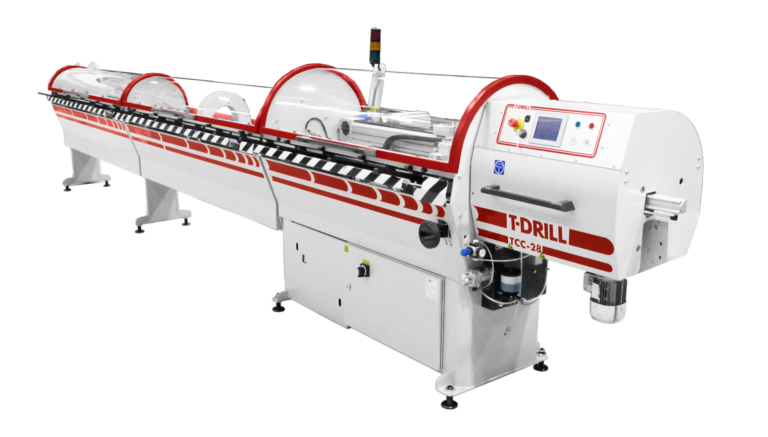
TCC-28 RL feeds tubes from a rackloader and cuts them chiplessly to programmed lengths. Selection also covers sorting and material remnant handling.
Tube cutting machine
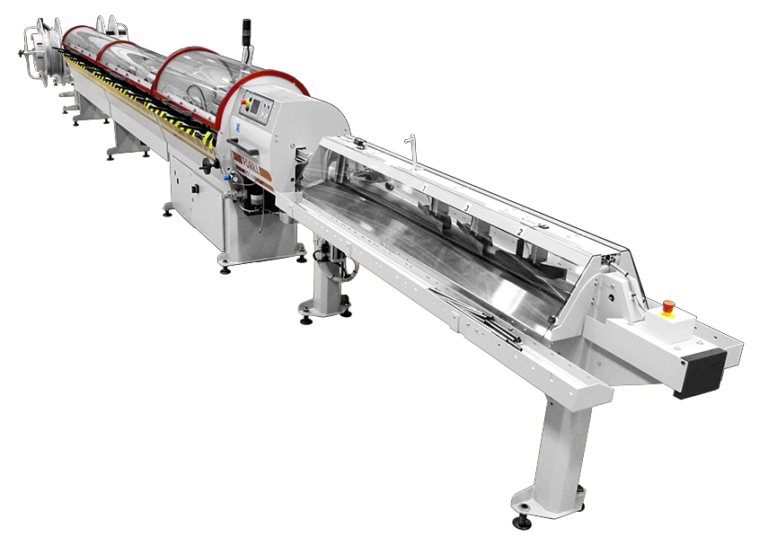
TCC-28 RL & Coil combines coil feeding with a rackloader for straight tubes. Both modes have separate material and equipment selection conditions.
Tube cutting machine
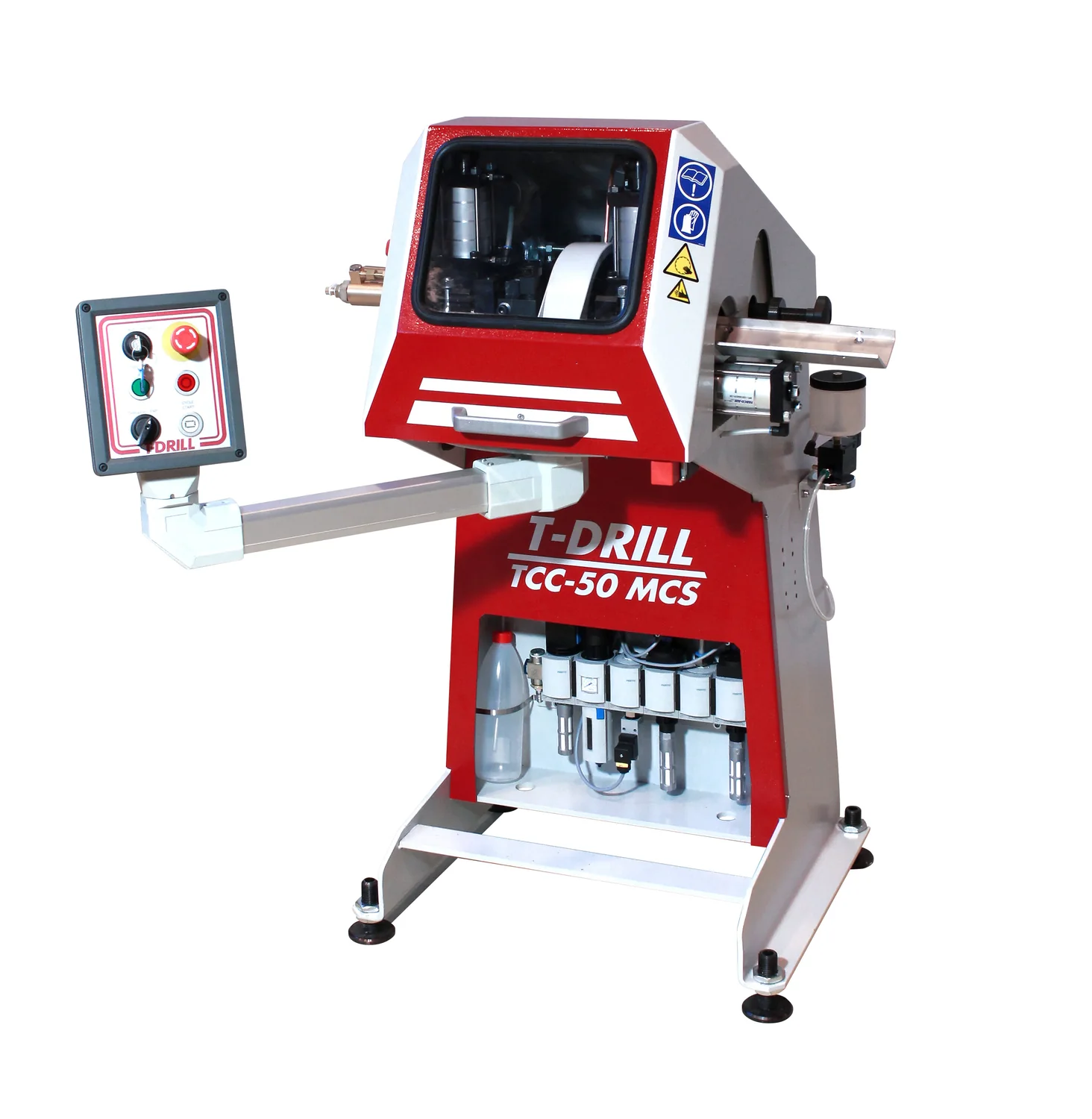
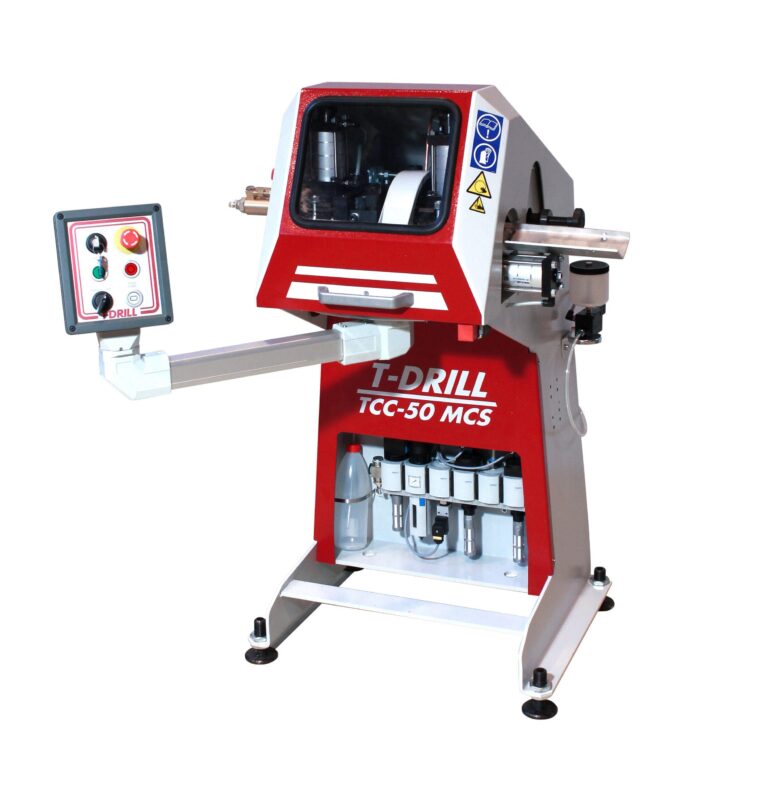
TCC-50 MCS is a chipless cutting workstation for smaller batches. The operator feeds the tube against a length stop and the machine performs the cutting cycle.
Tube cutting machine
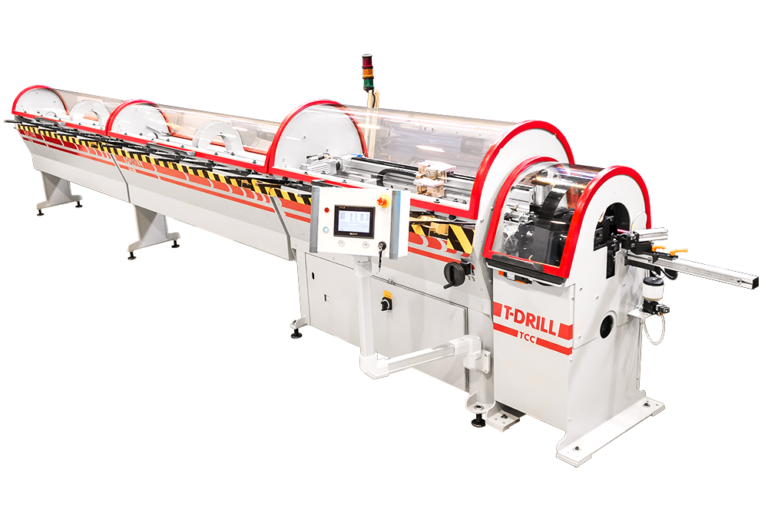
TCC-50 RL automates cutting of Ø8–50.8 mm straight tubes. The rackloader and sorter are selected for the input material and required part lengths.
Tube cutting machine
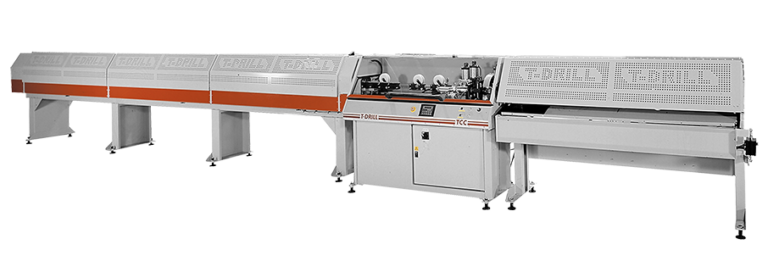
TCC-50 RL & Coil combines cutting of straight and coiled tubing. Capacity for each material route, lengths and equipment are agreed as one line configuration.
Tube cutting machine
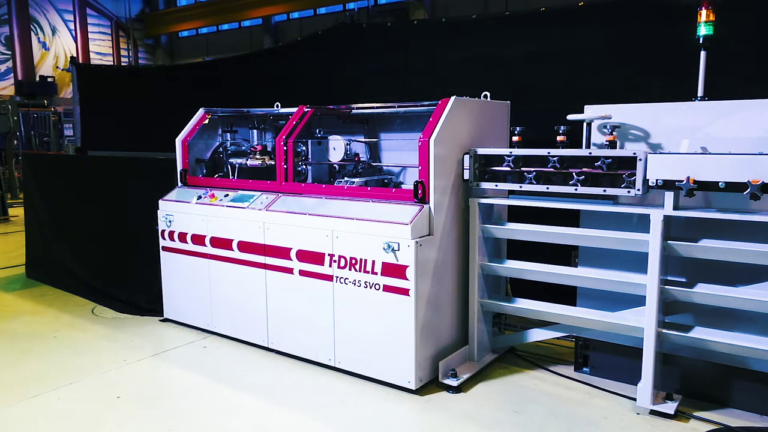
TCC-45 SVO uses servo-driven roller feeding for chipless cutting of coiled tubes. It is particularly useful for longer cut lengths and frequent length changes.
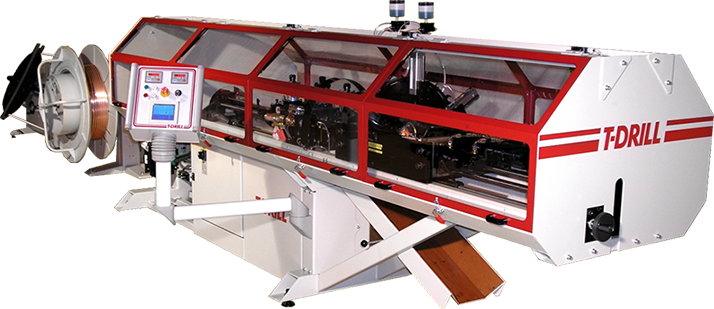
Cutting and end-forming line
TCC-45 EF3 combines chipless cutting and end forming in one system. Up to three tool strokes can prepare a profile without moving the part to a separate end former.
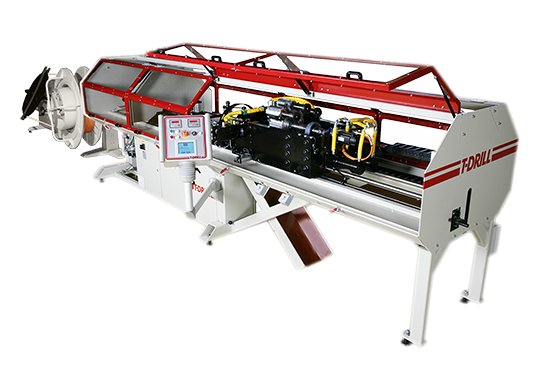
Cutting and end-forming line
TCC-45 EF8 combines tube cutting with a cycle of up to eight forming strokes. It allows a more complex end profile to be planned within one line.
No results. Change the name or filter.
Selection with TARGA
TCC uses chipless cutting. The cutting method is selected for the required end quality, material and subsequent operation.
This configuration handles straight lengths and coil. It has one model record describing its equipment and feeding methods.
Yes. TCC-45 EF3 and EF8 are also included in the end forming category. Both categories lead to the same model pages; configuration follows the required geometry.