
T-DRILL · Collaring
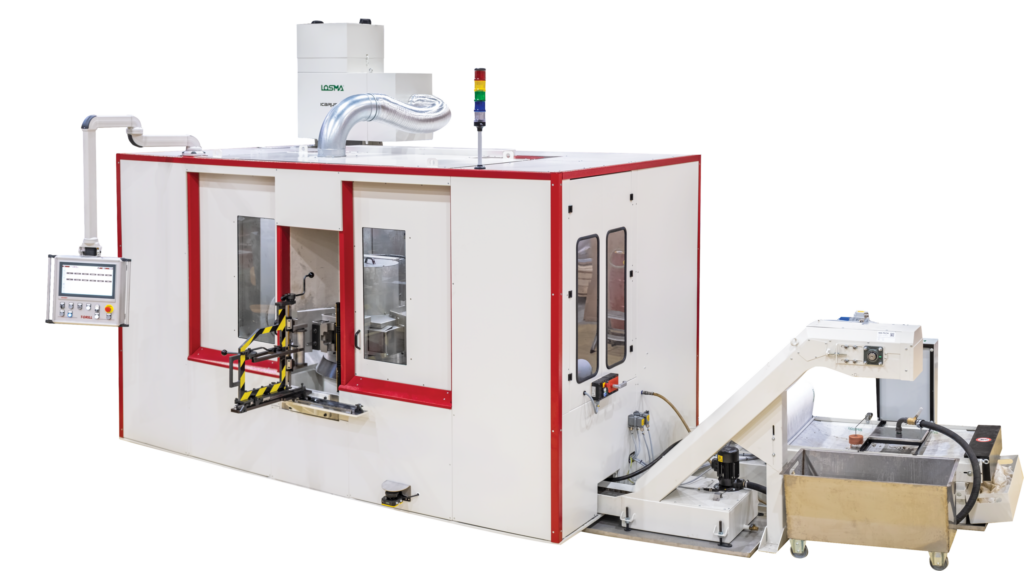
TBC-115A production centre for series of tees.
TBC-115 uses a rotary table and three units for hole milling, collaring and trimming. Successive stages can work in parallel on different parts.
Selection, implementation and support in Poland — TARGA.
From workpiece to process
Applications for TBC-115
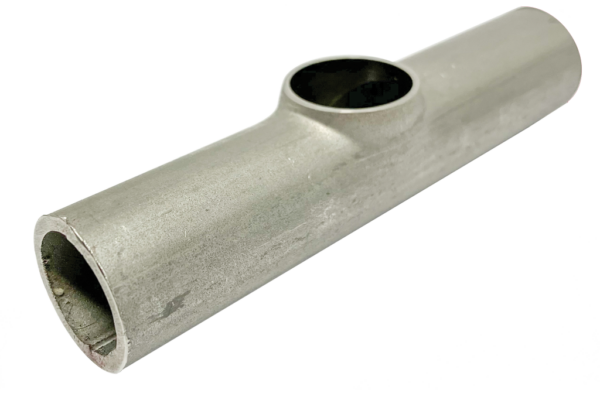
A solution for repeat production of T-pieces. Its workflow around a rotary table differs from systems intended for long manifolds. Selection covers the family of tees, clamping and loading arrangements.
How does the process work?
Milling
Produce the pilot hole.
Collaring
Draw a collar from the tube material.
Trimming
Prepare the branch edge for joining.
Working range
Specifications and selection conditions
| Branch — O.D. | Ø17–114.3 mm |
|---|---|
| Run tube — O.D. | Ø21.3–114.3 mm |
| Operations | Hole milling, collaring, trimming |
| Processing units | 3, arranged around a rotary table |
| Rated power | 15 kW |
| Materials | Steel, stainless steel, aluminium, copper, CuNi; subject to selection |
| Production rate | To be confirmed for the part, programme and workstation handling |
Configuration
Equipment selected for production
Tools within the adjustment ranges of the heads, workpiece clamping and production handling are selected for the fitting family. The scope of TD-Vault connectivity is agreed separately.
Machine and workpiece
Manufacturer resources
Brochures describe configurations from the stated edition. We confirm the offered scope for your workpiece.
Watch the equipment in operation
Manufacturer videos may show optional equipment. Playing a video connects to YouTube.
What do we need for selection?
Send tee drawings, material, wall thicknesses, required tolerances and target output per shift.
Before you choose
Do all three operations work on one part simultaneously?
The table distributes operations between units. Parallel processing concerns different parts in successive positions.
Is 160 parts per hour a fixed production rate?
The manufacturer gives this result for specific conditions. Project planning uses a cycle time checked for the actual tee, wall thickness and handling arrangement.
Explore related solutions
Industrial machine
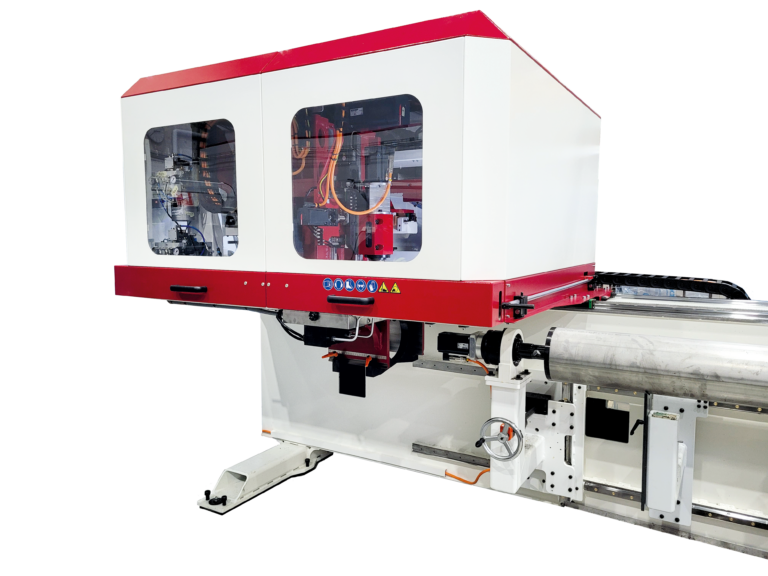
SEC-115
SEC-115 combines collaring with automatic tool changes. It provides a starting point for manifold production with multiple branches, different diameters and repeatable positions along the tube.
Industrial machine
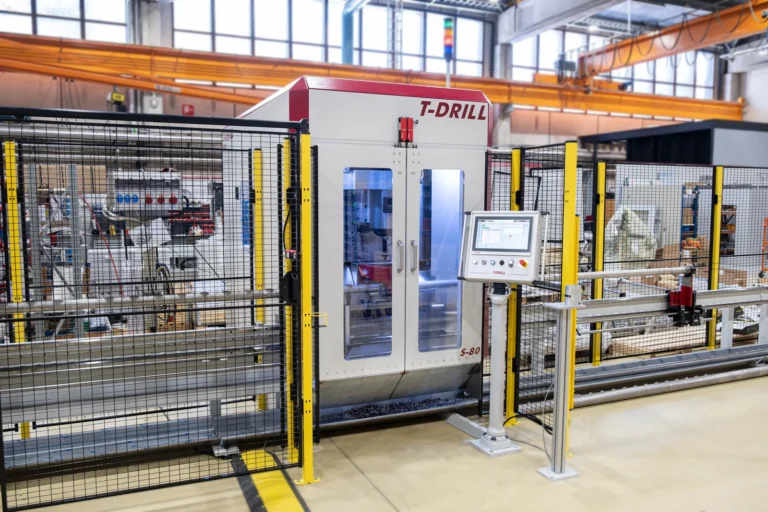
S-80
S-80 combines collaring with a tool magazine and automatic tube positioning in the AFT configuration. It suits repeat production where successive branches have different positions and diameters.
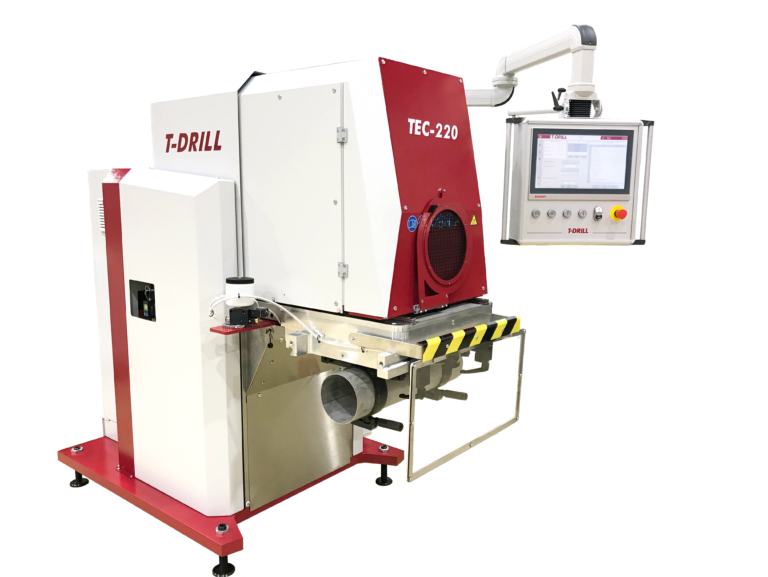
Industrial machine
TEC-220
TEC-220 forms branches directly from the run tube wall. Hole milling, collaring and trimming take place at one workstation, for branches up to 219.1 mm outside diameter.