
T-DRILL · Collaring
S-28Collaring tubes with tight bends.
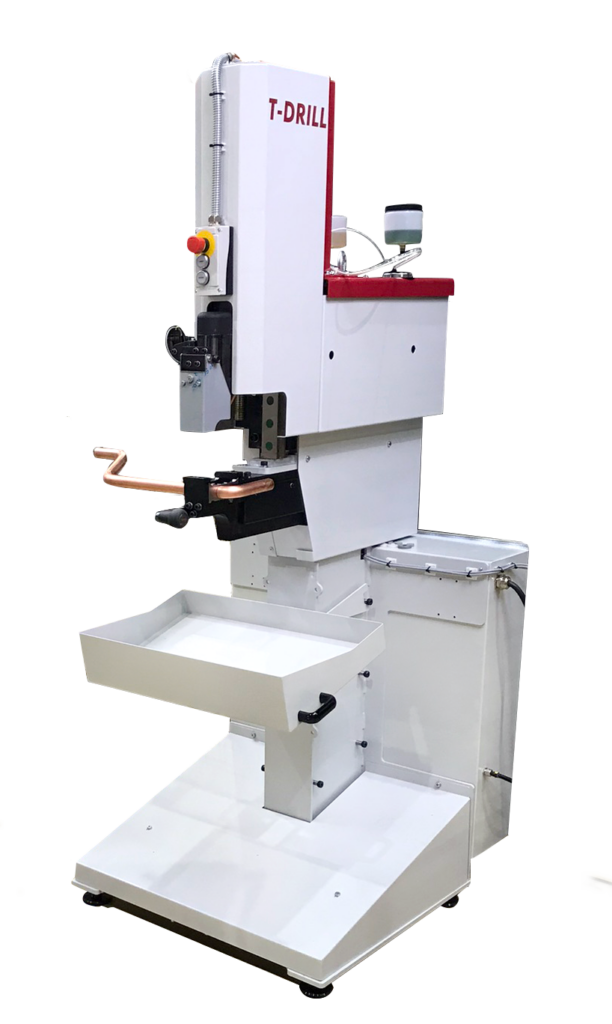
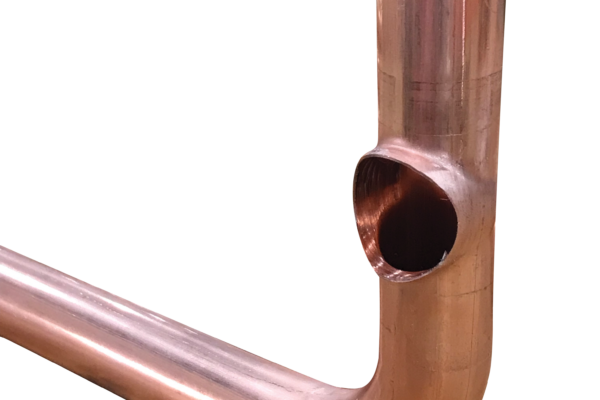
S-28 forms branches in straight and bent tubes. Its slim tooling area helps reach workpieces where a larger unit would restrict access.
Selection, implementation and support in Poland — TARGA.
From workpiece to process
Applications for S-28
S-28 selection starts with the space around the branch location: bend radius, adjacent tube legs and the clamping area. A servo drive controls tool movement; tooling is selected for the material and subsequent joining method.
How does the process work?
Geometry
Check access to the straight or bent tube.
Tool cycle
Drill, form and, where required, trim the collar.
Joint preparation
Inspect the branch before subsequent brazing or welding.
Working range
Specifications and selection conditions
| Drilling / collaring / trimming | Ø12–30 mm O.D. |
|---|---|
| Elliptical pilot hole / collaring | Ø17.2–30 mm O.D. |
| Drilling / collaring — Cu and Al | Ø6–28 mm |
| Run tube — O.D. | Ø8–30 mm |
| Materials | Steel, stainless steel, aluminium, copper, CuNi |
| Rated power | 4 kW |
| Compressed air | 6 bar; 55 l/min |
| Supply | 200–240 V / 400–480 V; 50/60 Hz; 3 phase |
Configuration
Equipment selected for production
Tools for the required diameter and cycle, clamps for bent tubes, lubrication and any workpiece handling are selected separately. Brazed joints require the appropriate collaring head.
Machine and workpiece
Manufacturer resources
Brochures describe configurations from the stated edition. We confirm the offered scope for your workpiece.
Watch the equipment in operation
Manufacturer videos may show optional equipment. Playing a video connects to YouTube.
What do we need for selection?
Send a drawing or model showing tube bends, material, diameters, wall thickness and branch positions.
Before you choose
When should I choose S-28 instead of S-56?
When access near a tight bend and the size of the working area determine the choice. We compare your drawing with the tool clearance of both machines.
Is the working range the same for every material?
No. Wall thickness, the diameter combination and the hole preparation method affect capacity. We check the relevant capacity table.
Explore related solutions
Industrial machine
S-56
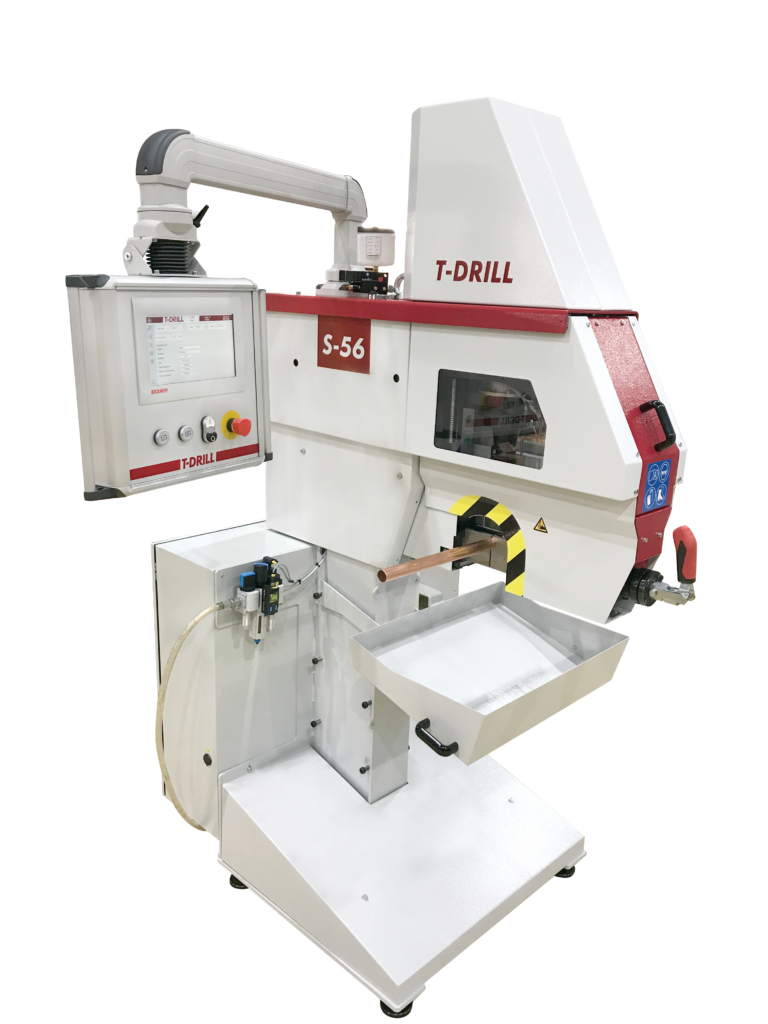
S-56 prepares branches for welded and brazed joints. The cycle is selected for the joining method, material and tube geometry, from a stand-alone workstation to a configuration with a feeding system.
Industrial machine
S-56 MultiFlex
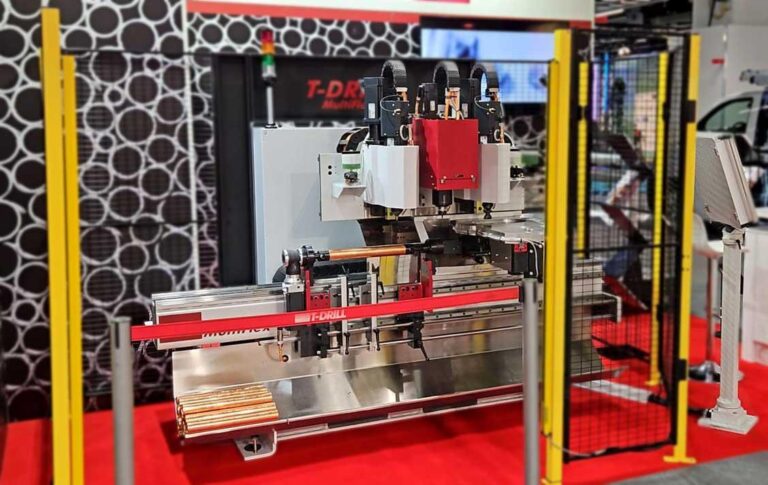
S-56 MultiFlex produces manifolds using up to 3 processing units. The head arrangement is selected for branch diameters and brazed or welded joints.