
T-DRILL · Collaring
S-56Branches in straight and bent tubes.
S-56 prepares branches for welded and brazed joints. The cycle is selected for the joining method, material and tube geometry, from a stand-alone workstation to a configuration with a feeding system.
Selection, implementation and support in Poland — TARGA.
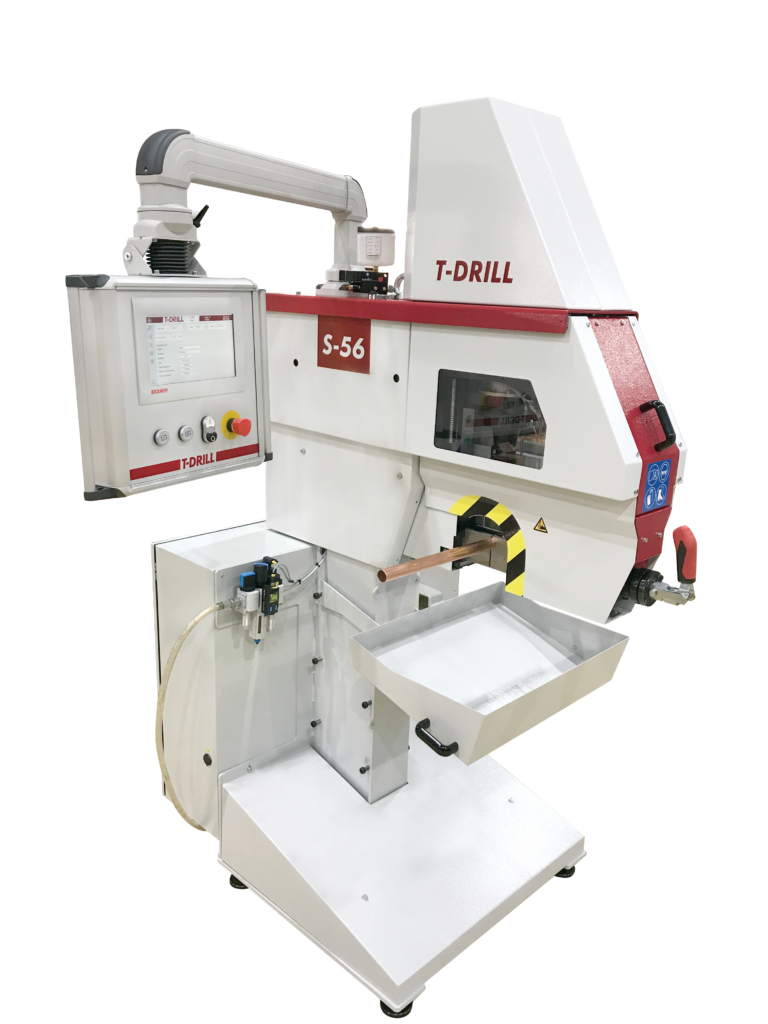
3 cycle optionsProcess selected for the joint
Straight and bent tubesClamping selected for the workpiece
Ø8–114.3 mmRun tube outside diameter range
Feeding tablesEquipment selected for the task
From workpiece to process
Start with the joint, then check machine capacity
A butt joint requires a prepared collar edge. For a lap joint, the branch tube is inserted into the collar. The working ranges of the different S-56 processes therefore describe different joint geometries.
Drilling, collaring and trimming
Ø10–58 mm O.D. for preparing a branch for a butt-weld joint.
Elliptical pilot hole
Ø17.2–60.3 mm O.D. with the pilot hole prepared before collaring.
Drilling and collaring — Cu / Al
Ø6–54 mm for copper and aluminium in the lap-joint process.
How does the process work?
Define the joint
Butt or lap joint? This determines the cycle and collar dimension.
Select tooling and clamping
Check diameters, wall thickness and tool access at the proposed branch location.
Plan workpiece handling
Select tube feeding and positioning for successive branches.
Working range
Specifications and selection conditions
| Drilling / collaring / trimming | Ø10–58 mm O.D. |
|---|---|
| Elliptical pilot hole / collaring | Ø17.2–60.3 mm O.D. |
| Drilling / collaring — Cu and Al | Ø6–54 mm |
| Run tube — O.D. | Ø8–114.3 mm |
| Materials | Steel, stainless steel, aluminium, copper, CuNi |
| Rated power | 4 kW |
| Compressed air | 6 bar; 55 l/min |
| Supply | 200–240 V / 400–480 V; 50/60 Hz; 3 phase |
Configuration
Equipment selected for production
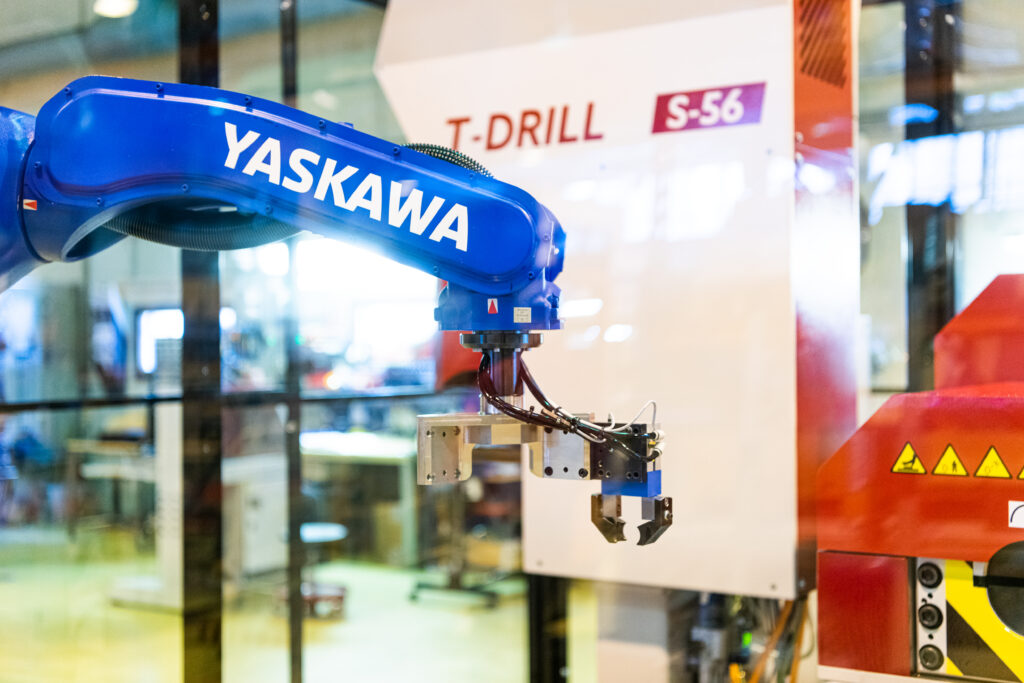
Tables and feeding systems are selected separately. The photograph of the guarded workstation shows an example of an extended configuration. S-56 PC and S-56 MultiFlex are separate variants; this page describes S-56.
Machine and workpiece
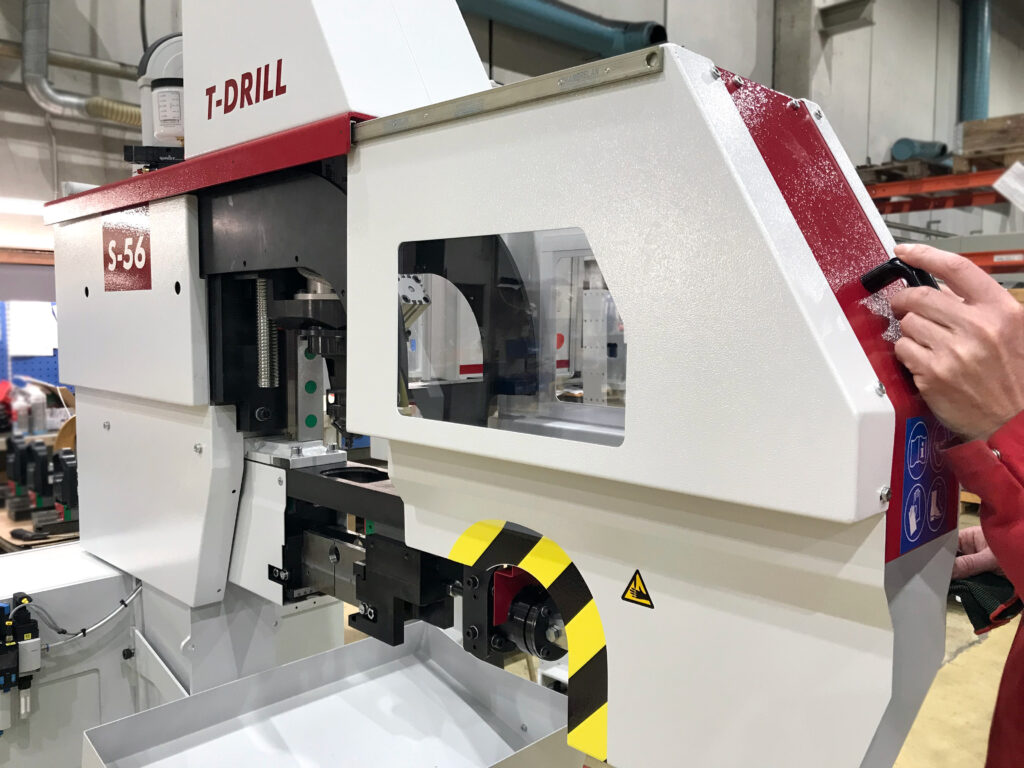
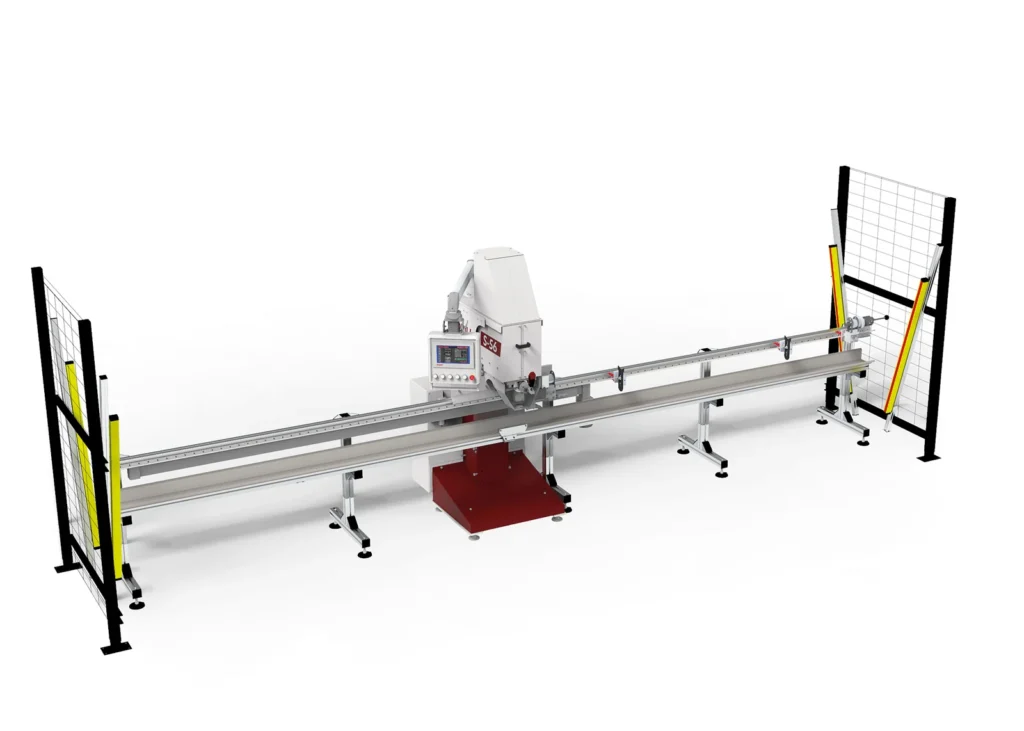
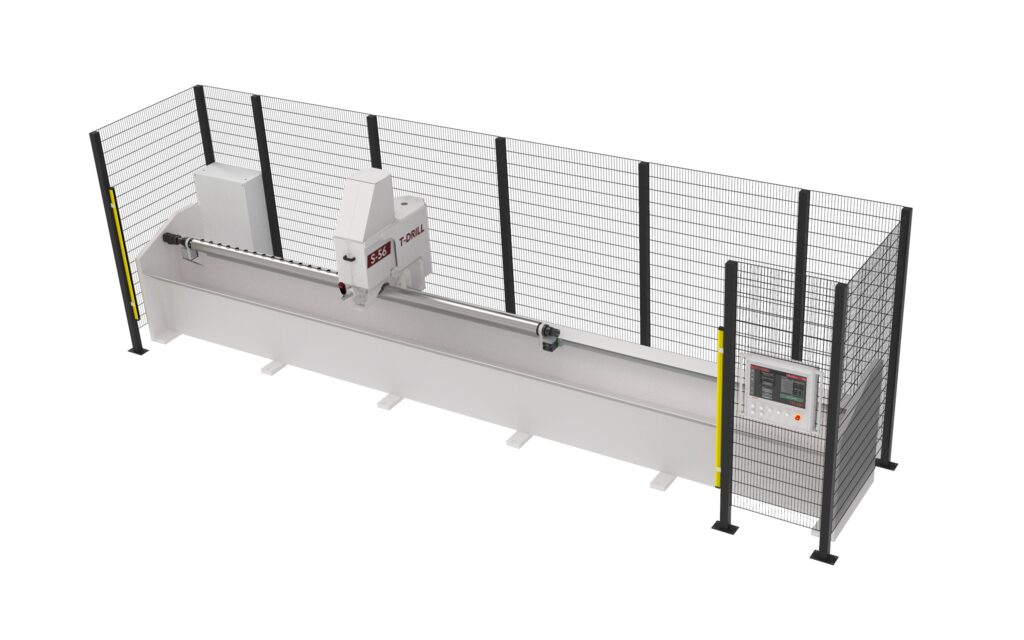
Manufacturer resources
Brochures describe configurations from the stated edition. We confirm the offered scope for your workpiece.
Watch the equipment in operation
Manufacturer videos may show optional equipment. Playing a video connects to YouTube.
T-DRILL S-56 Collaring Machine for producing T-outlets on both straight and bent tubes
Open on YouTube ↗What do we need for selection?
Start with a brief description of the workpiece. If you have a drawing, include diameters, wall thickness and the joining method.
Before you choose
Will S-56 suit my manifold?
We need diameters, wall thickness, material, branch spacing and the joining method. For a bent tube, also show the bend layout and access to the working area.
Why does the table include inside and outside diameters?
They refer to different ways of preparing the joint. Compare the dimension with your joint drawing, as well as the nominal tube size.
Explore related solutions
Industrial machine
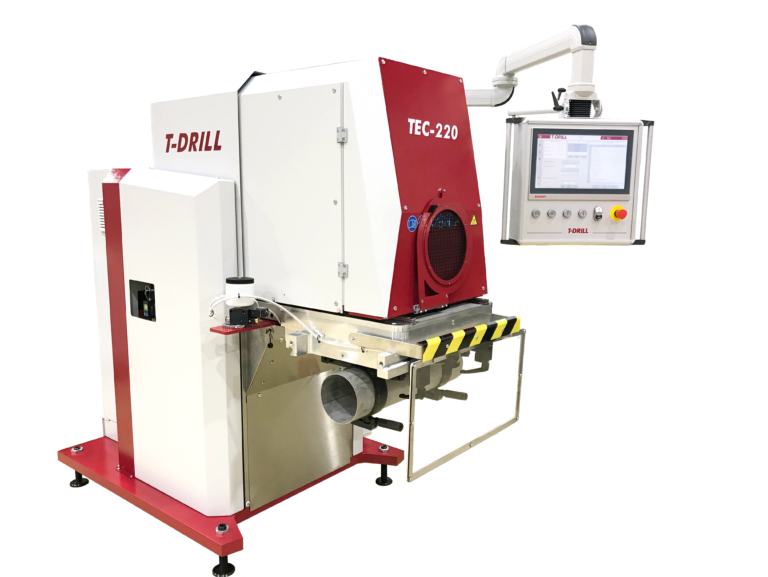
TEC-220
TEC-220 forms branches directly from the run tube wall. Hole milling, collaring and trimming take place at one workstation, for branches up to 219.1 mm outside diameter.
Industrial machine
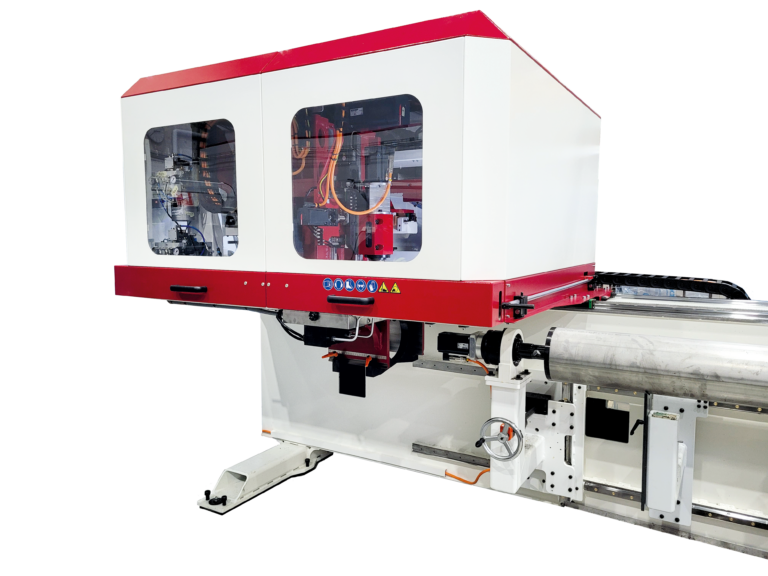
SEC-115
SEC-115 combines collaring with automatic tool changes. It provides a starting point for manifold production with multiple branches, different diameters and repeatable positions along the tube.