
T-DRILL · Collaring
T-115 CuCollaring copper tubes.
T-115 Cu prepares Ø18–108 mm branches in copper tubes. Separate tools make the pilot hole and form the collar for joining the branch tube.
Selection, implementation and support in Poland — TARGA.
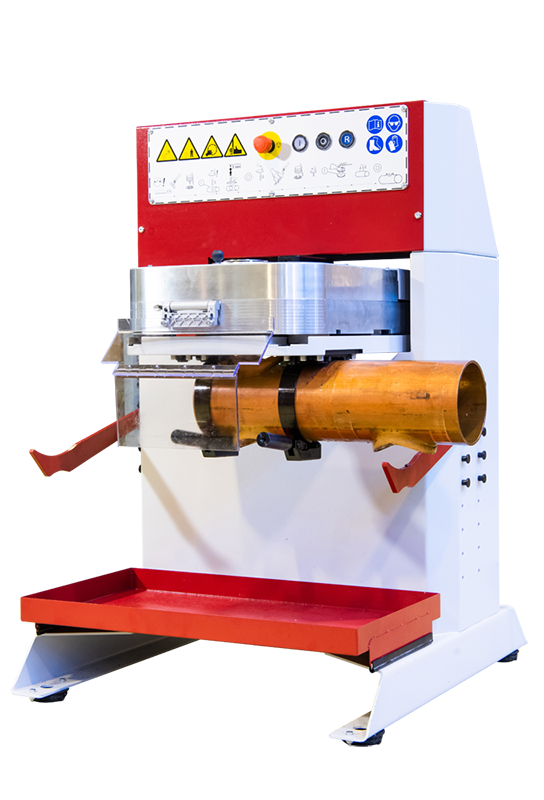
From workpiece to process
Applications for T-115 Cu
A workstation for manufacturers of copper HVAC parts and manifolds. Adjustable heads are selected for the branch tube diameter; clamping and supports are selected for the run tube dimensions.
How does the process work?
Hole
Prepare the pilot hole using the selected tool.
Branch
Form the collar using the adjustable head.
Assembly
Inspect the collar and prepare the subsequent joint.
Working range
Specifications and selection conditions
| Material | Copper |
|---|---|
| Branch | Ø18–108 mm |
| Run tube | Ø22–267 mm |
| Maximum wall thickness | 5.38 mm; subject to the diameter combination |
| Motor | 2.2 kW |
| Weight | 250 kg |
Configuration
Equipment selected for production
Adjustable heads, hole preparation tools, clamps, supports and a measuring table. Before extending an existing workstation, we check the machine version and equipment compatibility.
Machine and workpiece
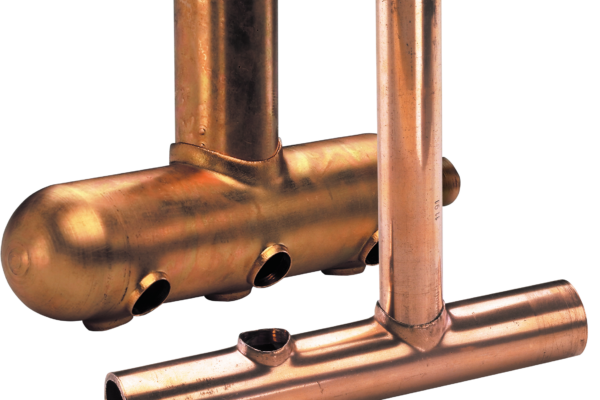
Manufacturer resources
Brochures describe configurations from the stated edition. We confirm the offered scope for your workpiece.
Watch the equipment in operation
Manufacturer videos may show optional equipment. Playing a video connects to YouTube.
What do we need for selection?
Send both tube diameters, wall thickness, copper grade and condition, branch quantity and spacing.
Before you choose
How does T-115 Cu differ from T-115?
T-115 Cu is the version intended for copper. The T-115 page describes a workstation for branches prepared for welded joints, using its corresponding documentation.
Does the measuring table cover the entire machine range?
This should not be assumed. Table clamps and capacity are selected separately, particularly for small tubes.
Explore related solutions
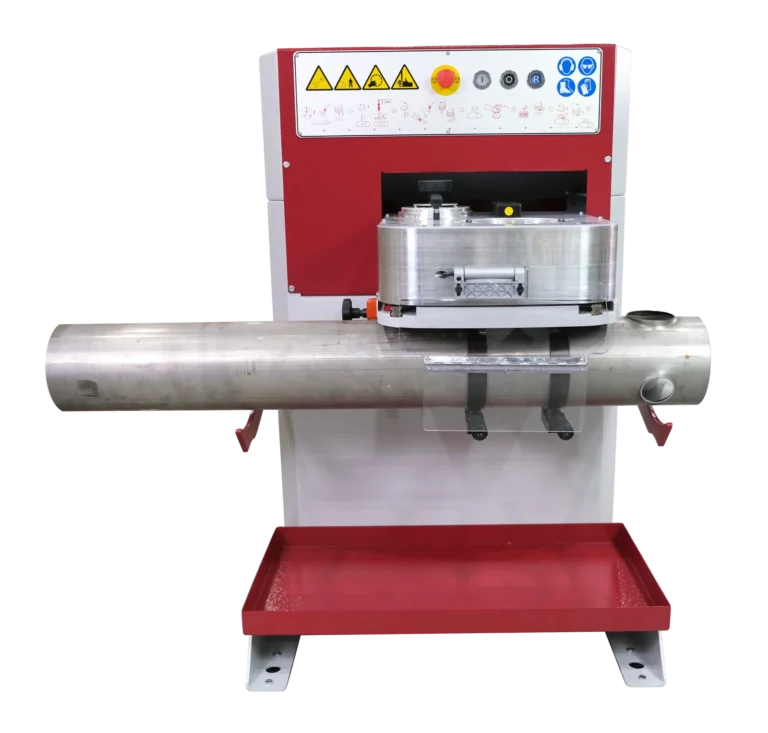
Industrial machine
T-115
T-115 prepares the hole, forms the collar and trims its edge at one workstation. This compact tube prefabrication machine offers a larger range than a portable tool, with positioning selected for your production.
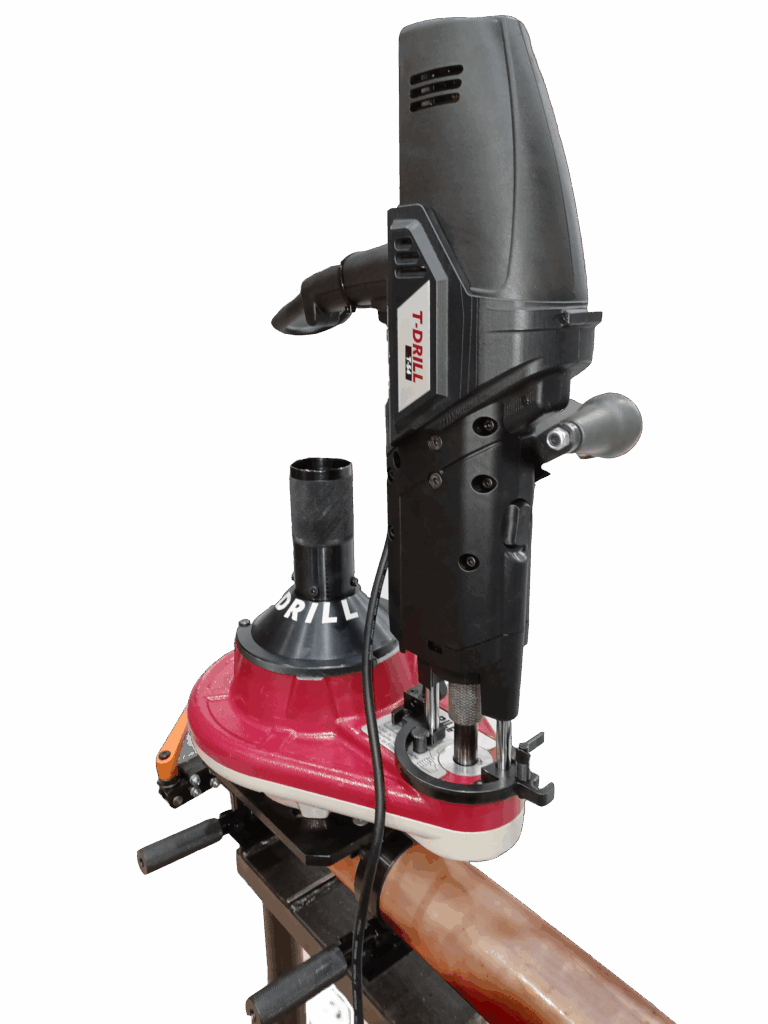
Range extension unit
PLUS 115 Cu
PLUS 115 Cu extends the capabilities of a compatible T-54 family tool. The set forms Ø54–115 mm branches; tools and clamping are selected for the run tube.
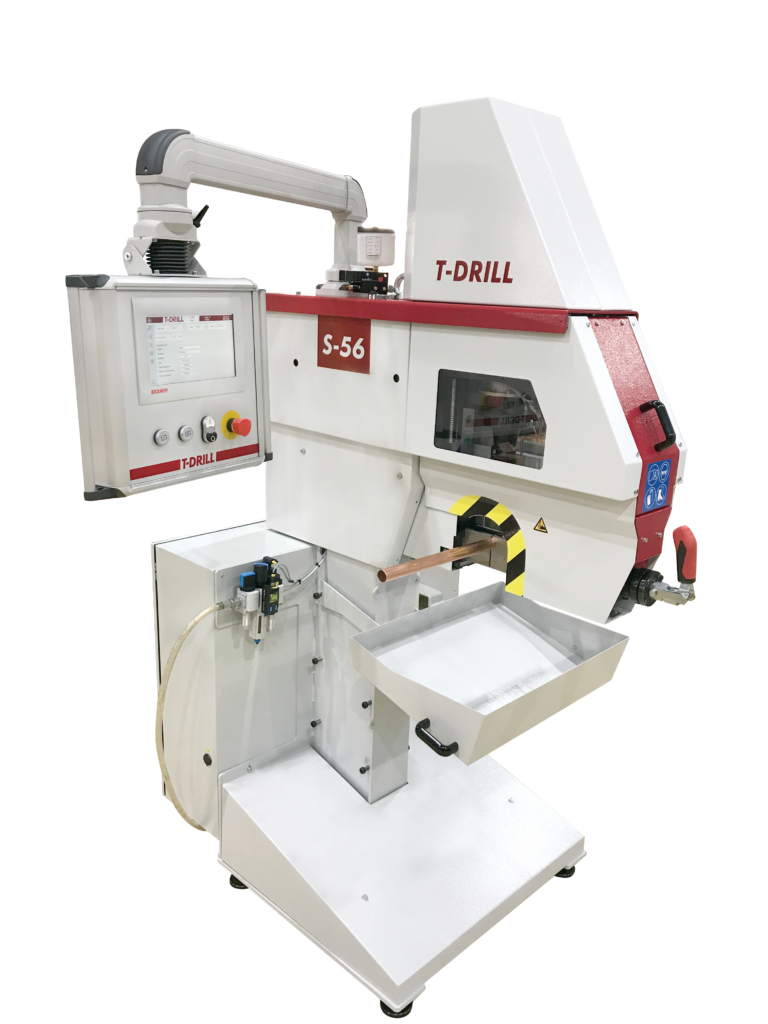
Industrial machine
S-56
S-56 prepares branches for welded and brazed joints. The cycle is selected for the joining method, material and tube geometry, from a stand-alone workstation to a configuration with a feeding system.