
T-DRILL · Flanging
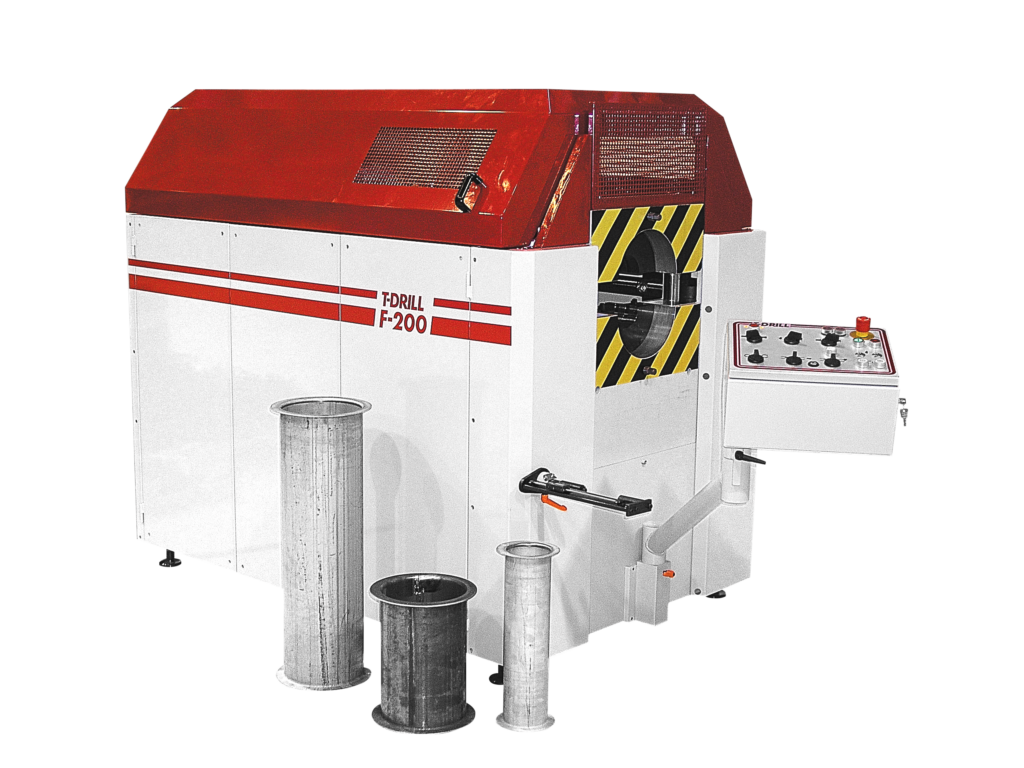
F-200Tube flanging up to Ø219.1 mm.
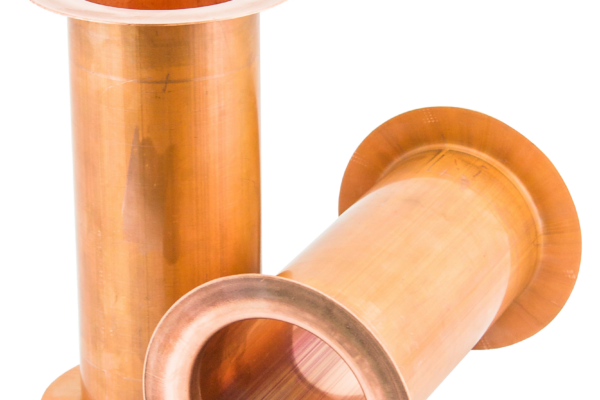
F-200 forms a flange directly on the tube end. Cold or hot forming, tools and supports are selected for the material, wall thickness and flange joint geometry.
Selection, implementation and support in Poland — TARGA.
From workpiece to process
Applications for F-200
A workstation for prefabricating piping and installation components in which the formed tube end works with a loose backing flange. Straight and bent tubes can be processed if the workpiece fits the working area and can be clamped correctly.
How does the process work?
Preparation
Check the tube end, loose backing flange and supports.
Forming
Form the flange in the selected COLD or HOT cycle.
Inspection
Check dimensions and the sealing face.
Working range
Specifications and selection conditions
| Tube diameter | Ø21.3–219.1 mm O.D. |
|---|---|
| Process | COLD / HOT — according to material and equipment |
| Wall thickness | According to material, diameters and manufacturer capacity charts |
| Power | 10 kW |
| Net weight | 2700 kg |
Configuration
Equipment selected for production
The HOT heating system, tools for the required flange face, clamps, supports and equipment for additional operations are selected for the project. Expanding and bevelling have separate capacities; these do not automatically match the flanging range.
Machine and workpiece
Manufacturer resources
Brochures describe configurations from the stated edition. We confirm the offered scope for your workpiece.
Watch the equipment in operation
Manufacturer videos may show optional equipment. Playing a video connects to YouTube.
What do we need for selection?
Send the material grade, tube diameter and wall thickness, flange dimensions, required backing flange and complete workpiece drawing.
Before you choose
Can every F-200 perform hot flanging?
The HOT process requires suitable heating equipment and confirmation of installation utilities. The scope of supply is agreed for the selected configuration.
Does the maximum diameter allow the maximum wall thickness for every material?
No. Selection must consider material, diameter, wall thickness and finished flange dimensions together.
Explore related solutions
Industrial machine
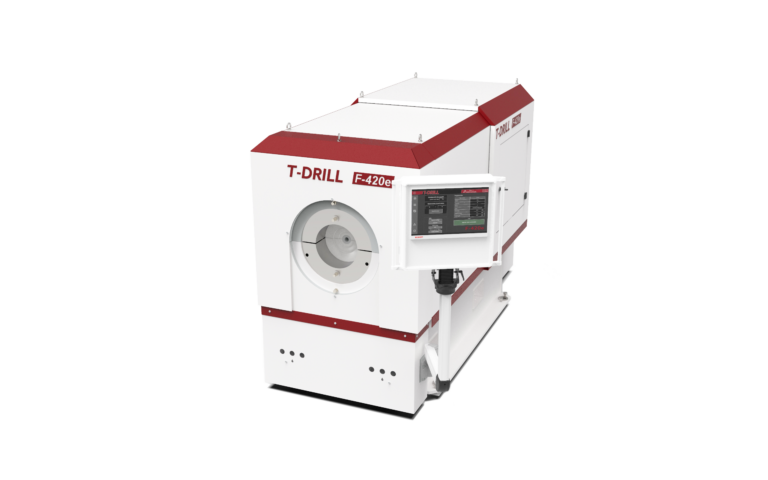
F-420e
F-420e prepares the tube end for a joint with a loose backing flange. Electric servo drives and stored programmes support repeatable flanging. Cold or hot forming is selected for the material, diameter and wall thickness.
Industrial machine
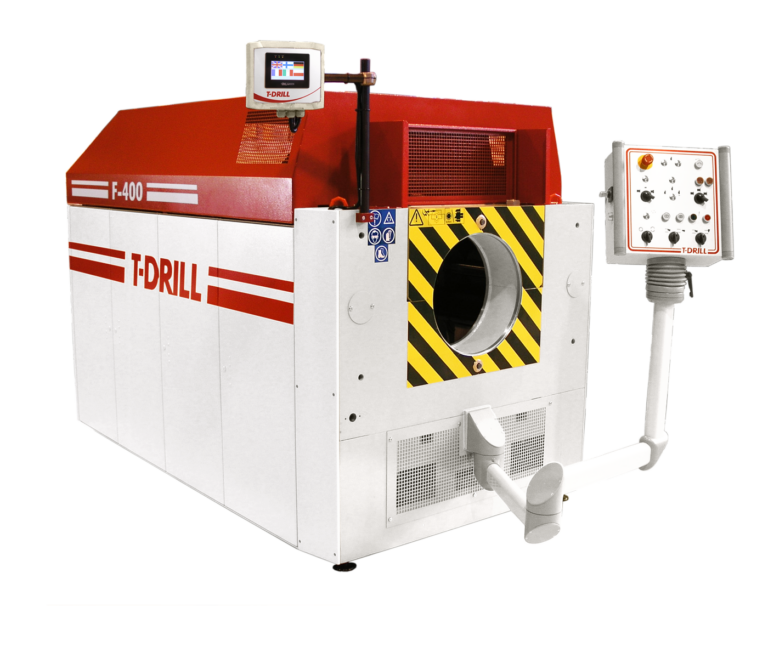
F-400
F-400 prepares flanged ends on Ø42.4–419 mm tubes. The COLD or HOT configuration is selected for the material and wall thickness; handling is selected for the workpiece length and weight.